Solar Flares and the Origin of Life

In 1952, the Miller-Urey experiment proved that lightning in the atmosphere of early Earth could produce the chemical building blocks of life. New research reveals that solar flares might do an even better job.

“The production rate of amino acids by solar protons is a thousand times greater than by lightning,” says Vladimir Airapetian of NASA’s Goddard Space Flight Center, a coauthor of the paper published April 28, 2023, in the research journal Life.


Above: An artist’s concept of the early Earth

Early research on the origins of life focused on lightning as an energy source. Stanley Miller of the University of Chicago filled a closed chamber with methane, ammonia, water, and molecular hydrogen – gases thought to be prevalent in Earth’s early atmosphere – and repeatedly ignited an electrical spark to simulate lightning. A week later, Miller and his graduate advisor Harold Urey analyzed the chamber’s contents and found that 20 different amino acids had formed.
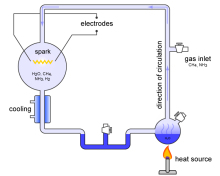
“That was a big revelation,” says Airapetian. “From the basic components of early Earth’s atmosphere, you could synthesize these complex organic molecules.”

Unfortunately, the Miller-Urey experiment was wrong about the make-up of Earth’s atmosphere. Scientists now believe ammonia (NH3) and methane (CH4) were far less abundant; instead, Earth’s air was filled with carbon dioxide (CO2) and molecular nitrogen (N2), which require more energy to break down. These gases can still yield amino acids, but in greatly reduced quantities.

Cooking the building blocks of life would require more energy. Seeking alternatives, some scientists pointed to shockwaves from incoming meteors. Others cited solar ultraviolet radiation. In 2016, Airapetian suggested a different idea: energetic particles from our sun.

Chemistry professor Kensei Kobayashi of the Yokohama National University heard about Airapetian’s idea and offered to help test it.

“I was fortunate enough to have access to several [particle accelerators] near our facilities,” says Kobayashi. These accelerators could be used to create energetic protons of the type produced by strong solar flares and CMEs.

Next, they set about re-creating the Miller-Urey experiment with a mixture of gases matching early Earth’s atmosphere as we understand it today. Kobayashi’s team shot the gas-filled chamber with protons (simulating solar particles) or ignited it with spark discharges (simulating lightning), comparing which worked best.

While protons (solar flares) formed amino acids with methane concentrations as low as 0.5%, spark discharges (lightning) required about a 15% methane concentration before any amino acids formed at all. Protons also tended to produce more carboxylic acids (a precursor of amino acids) than spark discharges.

Overall, solar protons outperformed lightning by a factor of a thousand.

This is significant because the young sun produced a lot of energetic protons. Some 4 billion years ago, the sun shone with only about three-quarters the brightness we see today, but its surface roiled with giant eruptions. “Superflares” were common, by some estimates occuring as often as 10 times a day, helping to cook plenty of amino acids.

This doesn’t mean solar flares created life–only the building blocks. How non-living chemicals might self-assemble into a living organism remains a mystery.

This story was brought to you by Spaceweather.com
Reversed-Polarity Sunspot Hurls a CME Toward Earth

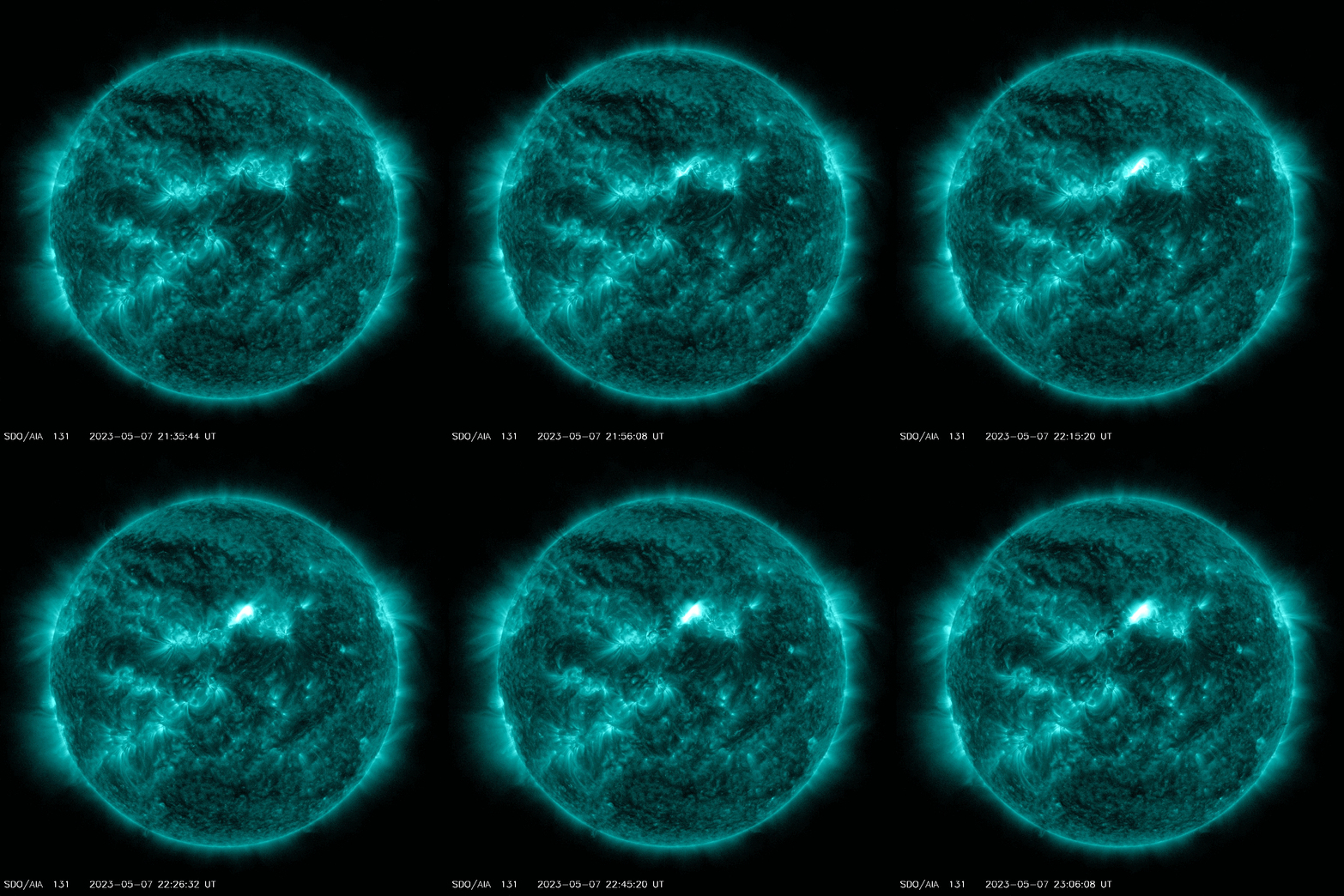
May 7, 2023: Reversed-polarity sunspot AR3296 just did it again. The backwards active region exploded on May 7th (2234 UT), producing a long-lasting M1.5-class solar flare. The blast was squarely Earth-directed:

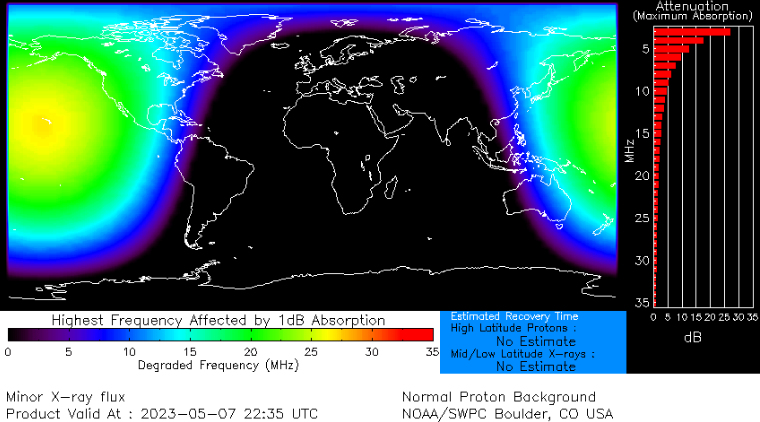
Extreme ultraviolet radiation from the flare ionized the top of Earth’s atmosphere, producing a minor shortwave radio blackout over the western USA and the Pacific Ocean: map. Mariners and ham radio operators may have noticed loss of signal at frequencies below 20 MHz for hours after the flare.

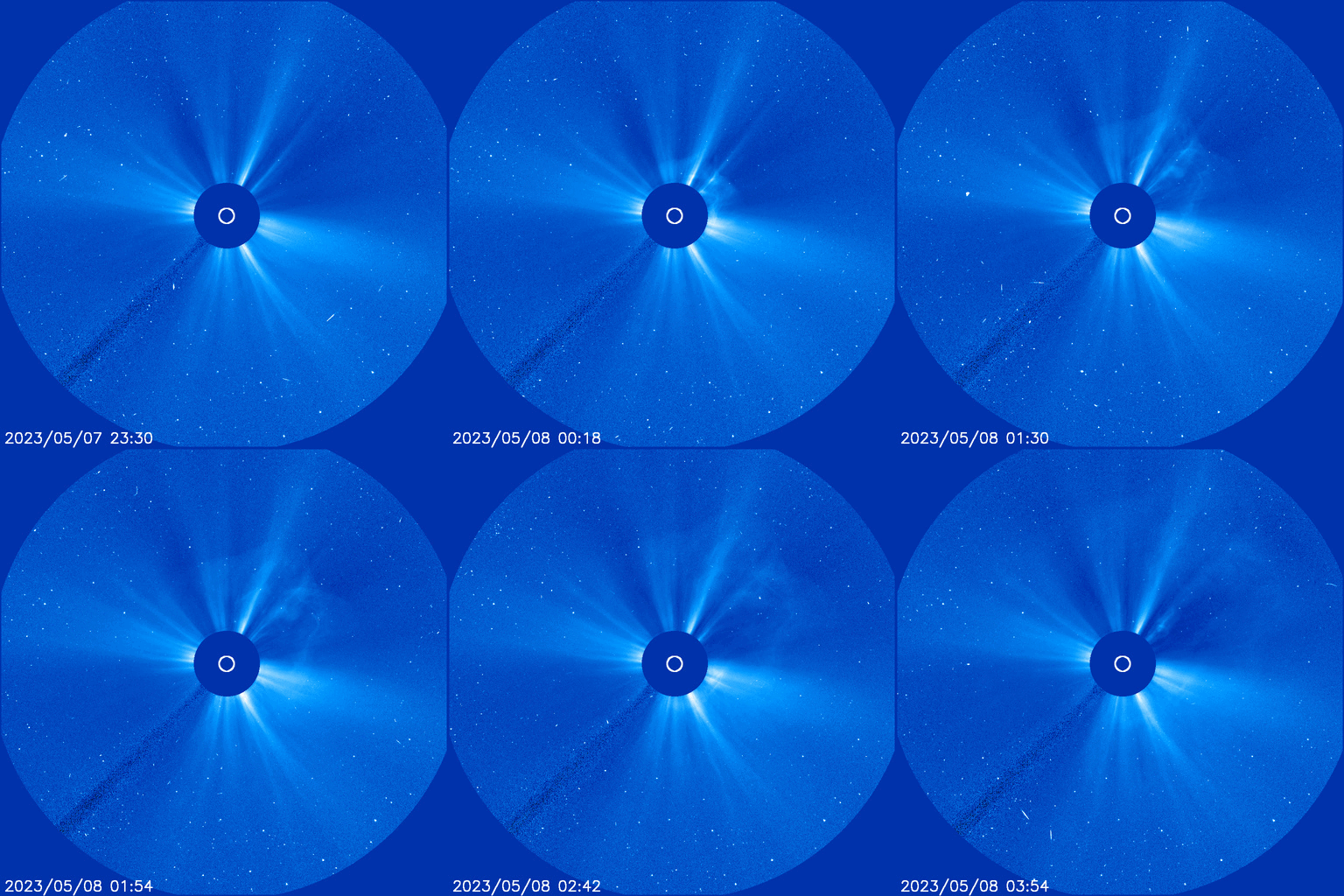
This explosion also hurled a CME toward Earth. SOHO coronagraphs recorded a full halo:

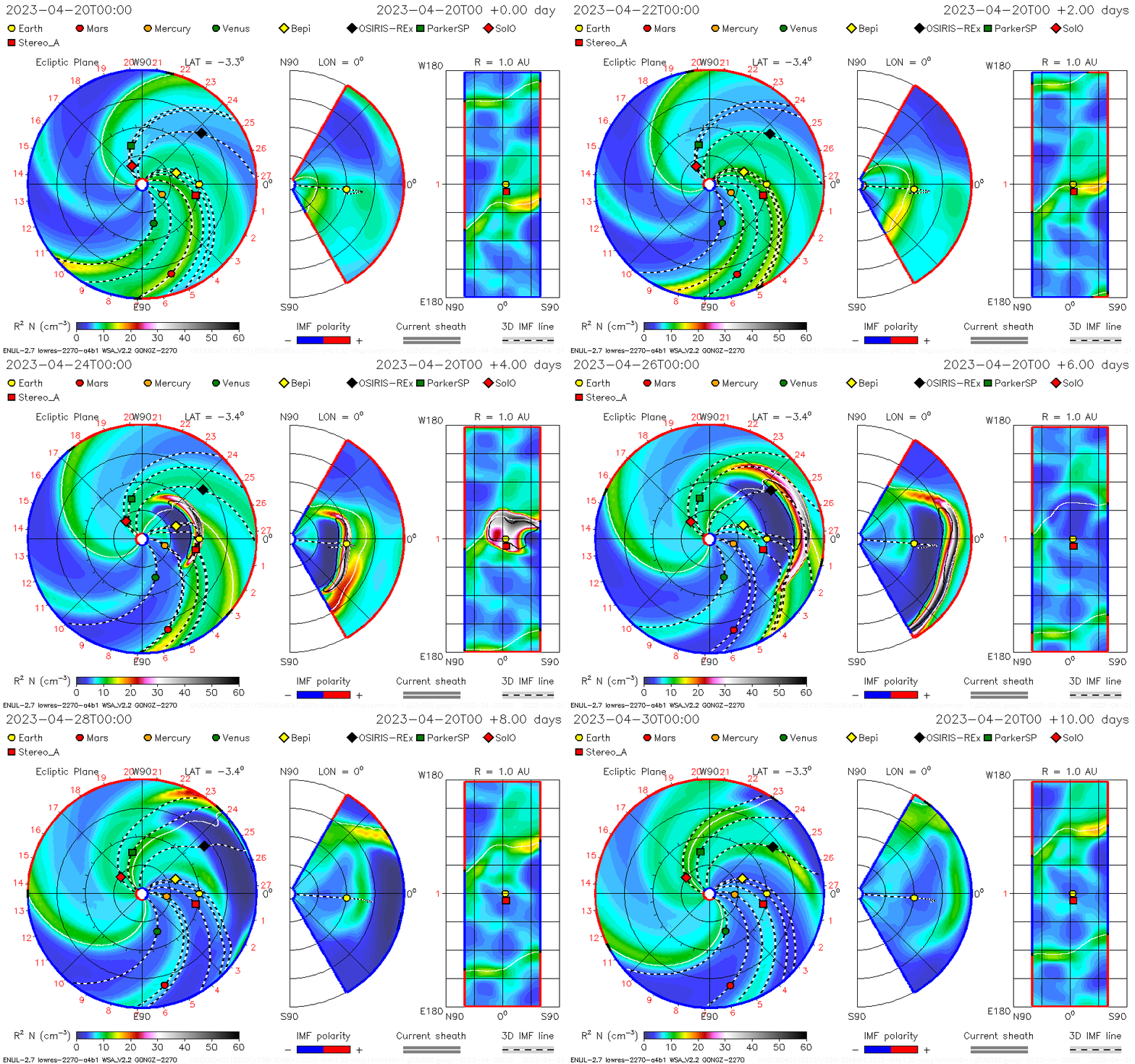
A NASA model of the CME predicts that it will arrive during the early hours of May 10th. The impact could cause moderate (G2) to strong (G3) geomagnetic storms. Solar flare alerts: SMS Text.

This story is brought to you by Spaceweather.com

Reversed-Polarity Sunspot

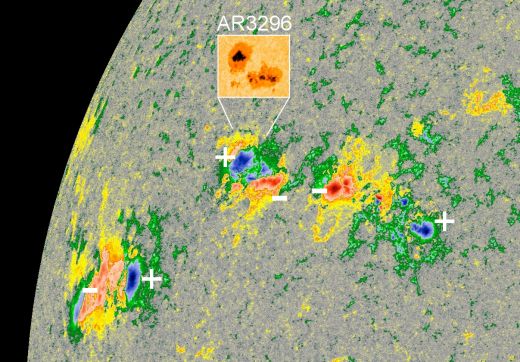
May 4, 2023: New sunspot AR3296 is breaking the law: Hale’s Law. The sunspot’s magnetic field is reversed compared to other nearby sunspots in the sun’s northern hemisphere. This magnetogram from NASA’s Solar Dynamics Observatory (SDO) shows the situation:

According to Hale’s Law, Solar Cycle 25 sunspots in the sun’s northern hemisphere should have a -/+ polarity (negative on the left, positive on the right). AR3296 is reversed; its polarity is +/-.

Studies show that about 3% of all sunspots violate Hale’s Law. In most ways, reversed polarity sunspots are totally normal. They have about the same lifespan and size as ordinary sunspots. In one important way, however, they are different. According to a 1982 survey by Frances Tang of the Big Bear Solar Observatory, reversed polarity sunspots are more than twice as likely to develop complex magnetic fields, in which + and – are mixed together. Reversed polarity sunspots are therefore more likely to explode. Solar flare alerts: SMS Text.

This story is brought to you by Spaceweather.com

Severe Geomagnetic Storm: April 23-24, 2023

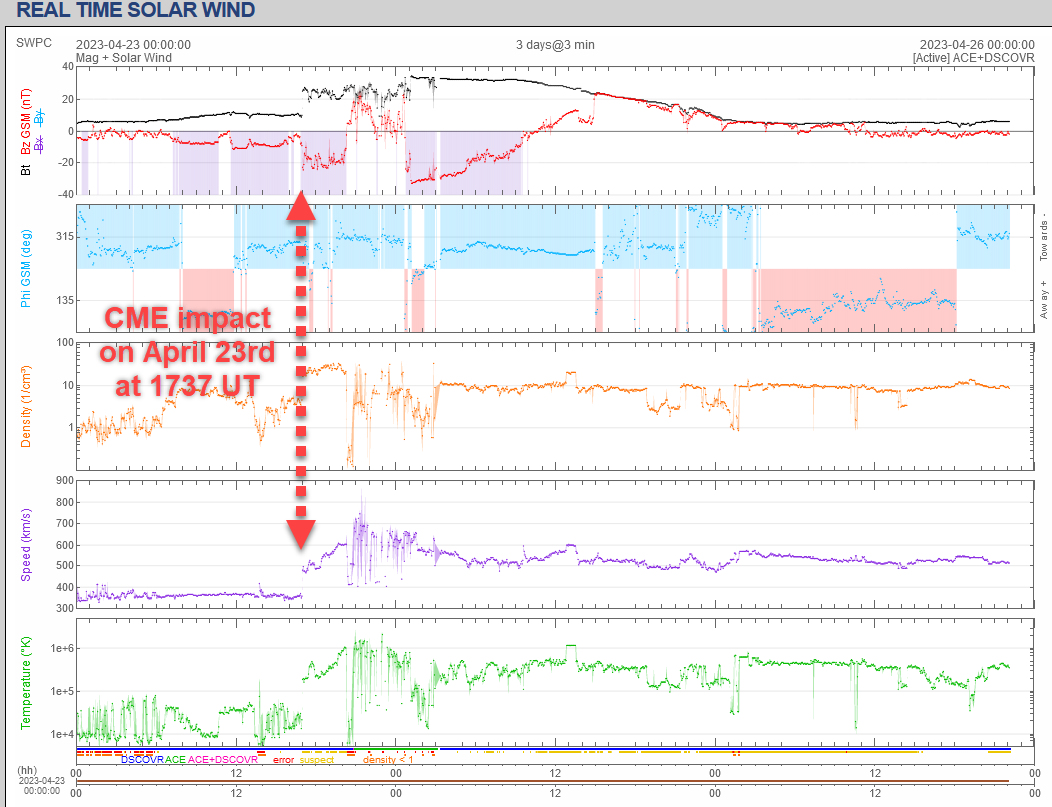
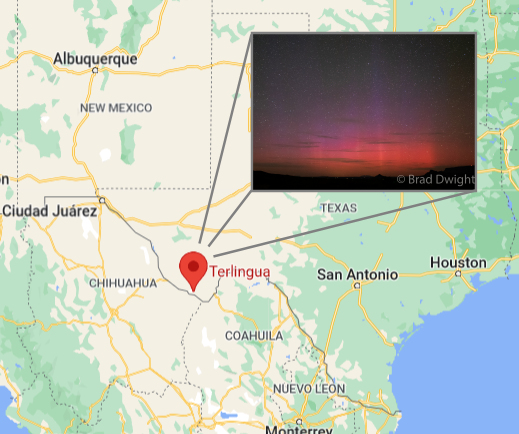
April 23, 2023: A CME hit Earth’s magnetic field on April 23rd, a direct hit that sparked a severe G4-class geomagnetic storm. Northern lights spilled out of the Arctic Circle all the way down to the US-Mexico border (+29.5N):

“I was out shooting the night sky in the Big Bend region of Texas when I saw the alerts of the severe geomagnetic storm,” says photographer Brad Dwight. “I decided to point my camera north just to see if I could see anything. These pillars exploded into view.”

In neighboring Arizona, David Blanchard made a video of the geomagnetic glow:

“It was a spectacular display here in Flagstaff (+35.2N),” says Blanchard. “The video covers the period 0354-0512 UTC on April 24th.”

Other notable low-latitude sightings in the USA include southern California (+32.5N), Arizona (+34.8N), Arkansas (+35.1 N), Colorado (+38N), Utah (+40.8N), Oklahoma (+36.3N), North Carolina (+36.2N), Tennessee (+35.4N), New Mexico (+35.9N) and Nebraska (+40.6N).

There were advantages to being a bit farther north. Consider this photo taken by Katie Korbuszewski of Helena, Montana (+46.5N):

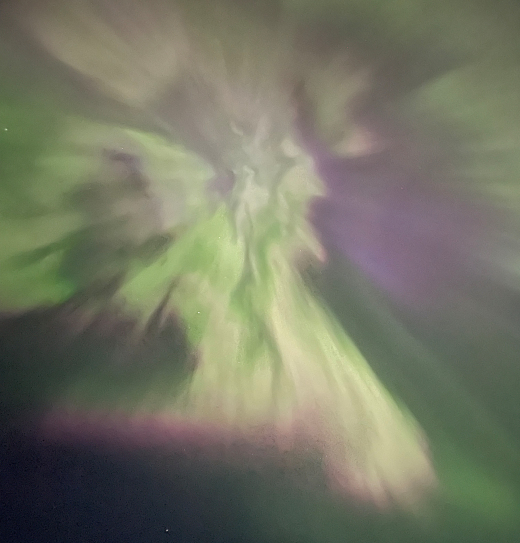
“This was the first time I have seen Northern Lights,” she says. “They became a bright dome right above my head and all around. You could visibly see cars and people in the gravel lot that had previously been obscured by darkness. I used my iPhone 12 mini on the night mode setting with an exposure of 3 seconds.”

“I thank my dad Paul Korbuszewski, an avid astronomer who checks Spaceweather.com like one checks the NASDAQ,” says Katie. “He gave me a call from Western Washington to tell me where to look!”

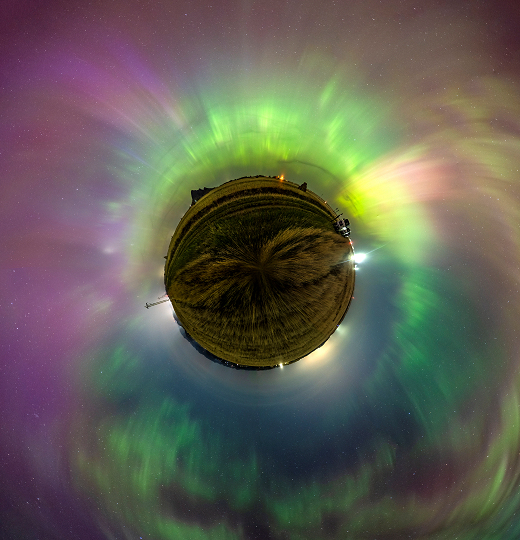
Auroras over Sturgis, South Dakota (+44.4N), were so big and intense, they surrounded onlookers in all directions. “They were everywhere,” says photographer Chris Yushta, “so I took a 360 degree panorama and turned it into a Panosphere.”

“The auroras were incredible!” says Yushta.

Did you miss the storm? Subscribers to our Space Weather Alert service received instant text messages when the CME arrived and when the subsequent storm erupted. Solar Cycle 25 is just getting started, so this will happen again. Make sure you don’t miss the next storm!

An Earth-Directed Explosion on the Sun

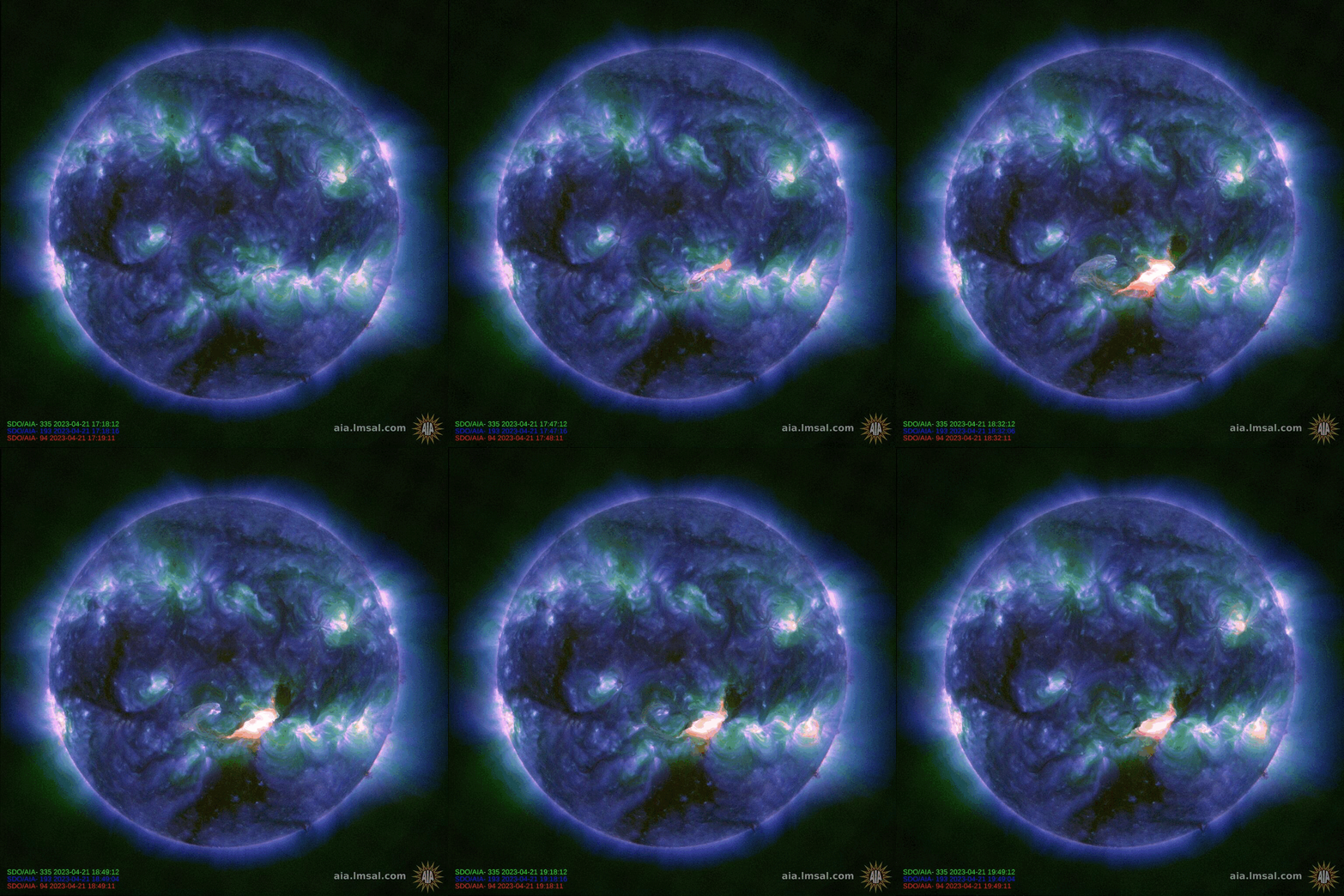
April 21, 2023: Earth is in the strike zone. On April 21st, a large magnetic filament snaking across the sun’s southern hemisphere exploded, hurling a cloud of debris in our direction. This movie from NASA’s Solar Dynamics Observatory shows what happened:

Soon after the eruption, the US Air Force reported strong Type II and Type IV solar radio bursts. These are natural shortwave emissions produced by shock waves preceding the CME as it passes through the sun’s atmosphere. Drift rates in the Type II burst suggested a CME velocity of about 580 km/s (1.3 million mph).

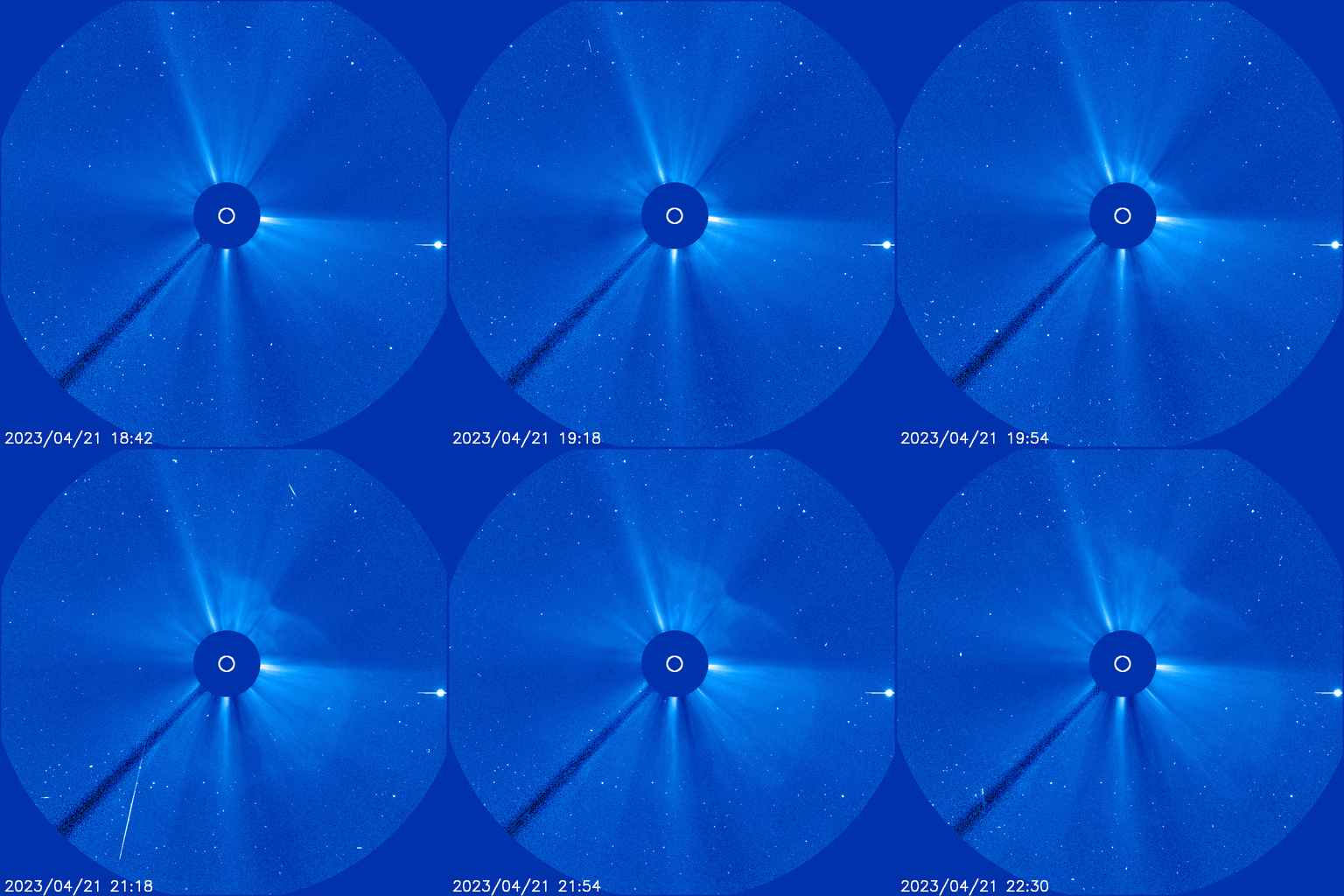
Images from SOHO coronagraphs have since confirmed the CME. It is a “halo CME” heading straight for Earth:

Models from NASA and from NOAA agree: the CME should reach Earth during the early hours of April 24th between the hours of 00:00 and 12:00 UT. The impact could spark G1- (Minor) to G2-class (Moderate) geomagnetic storms, with a slight chance of G3 (Strong). Aurora alerts: SMS Text.

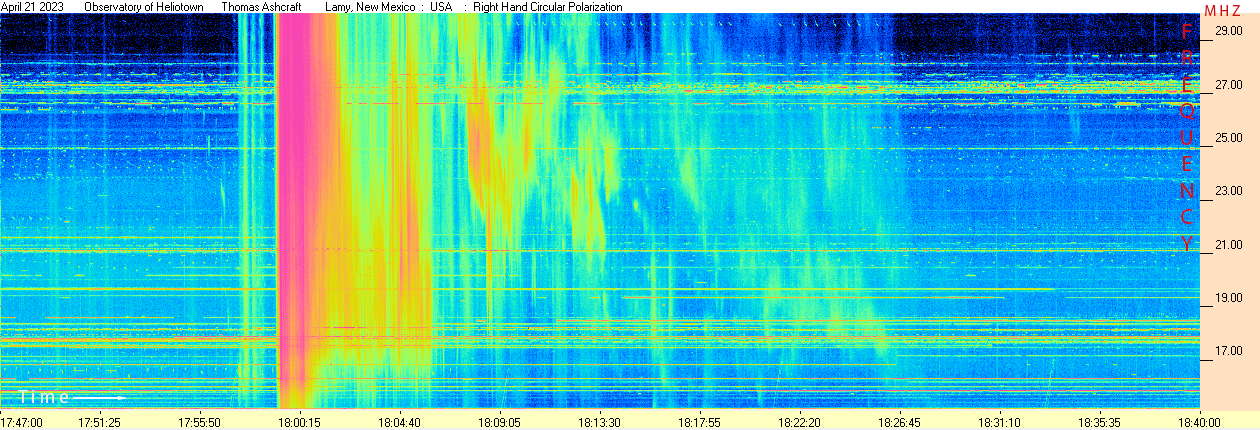
A BURST OF STATIC FROM THE SUN: The explosion that hurled a CME toward Earth on April 21st also illuminated our planet with an intense burst of shortwave radio static. Amateur astronomer Thomas Ashcraft of New Mexico recorded the outburst:

“Few solar radio bursts show as hot purple on my spectrograph, but this one ‘rang the bell’,” he says. “Here is an audio recording in stereo with 22 MHz in one channel and 19 MHz in the other.”

The static in Ashcraft’s recording, which washes over the listener like a slow ocean wave, is naturally produced. Astronomers classify it as a Type V solar radio burst caused by energetic beams of electrons ray-gunning through the sun’s atmosphere. The electrons were accelerated by the same underlying explosion that hurled a CME toward Earth.

Solar radio bursts are an underappreciated form of space weather. We often talk about radio blackouts, which happen when solar flares ionize the top of Earth’s atmosphere. A radio blackout suppresses the normal propagation of terrestrial radio signals. Solar radio bursts, on the other hand, produce a radio drownout. Intense static from the sun overwhelms normal transmissions, drowning out the voices radio operators are trying to hear.

Solar radio bursts will happen more and more often as Solar Cycle 25 intensifies. You can hear them youself using a RadioJOVE radio telescope kit from NASA.

A ‘SpaceX Spiral’ Over Alaska

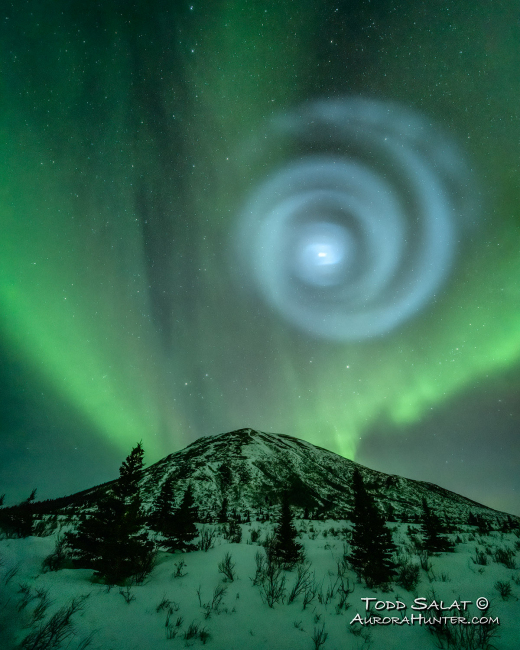
April 15, 2023: Longtime aurora hunter Todd Salat is no stranger to fantastic displays in the night skies of Alaska. But even he was not prepared for what happened after local midnight on Saturday, April 15th. 

“I was utterly surprised and mystified when I first spotted a distant bright light coming toward me from the northern horizon,” says Salat. “At first I thought it was a jet airliner flying through some clouds. Then it took on the spiral shape and grew big fast!” This is what he saw:

“I was shooting frantically with two camera/tripod set-ups knowing that this was a unique event and within about seven minutes the ‘apparition’ swept by and disappeared.  It was spellbinding!  For the past two nights I had been photographing auroras over this dome (Donnelly Dome) and hoping to catch something special. I got my wish!”

Salat witnessed a “SpaceX spiral.” Three hours earlier (Saturday, April 15th at 0648 UT), SpaceX launched a Falcon 9 rocket from California’s Vandenberg Space Force Base. It carried 51 small satellites to Earth-orbit, a mission known as Transporter-7. When the rocket’s discarded upper stage passed over Alaska, it vented its unused fuel. A bit of spin turned the harmless cloud into a spectacular spiral.

An all-sky camera at the University of Alaska’s Poker Flat Research Range also recorded the phenomenon:

The spiral appears about halfway through the video at the 09:50 UT mark. Even though you know it’s coming, it’s still a shock when it zooms through the field of view.

As strange and rare as it appears, the spiral is a routine by-product of SpaceX operations. Similar blue swirls have been seen after many Falcon 9 launches including this one over New Zealand, another over east Africa, and two more above Hawaii. One may be coming soon to a sky near you.

This story was brought to you by Spaceweather.com
It’s Back: The Sodium Tail of Mercury

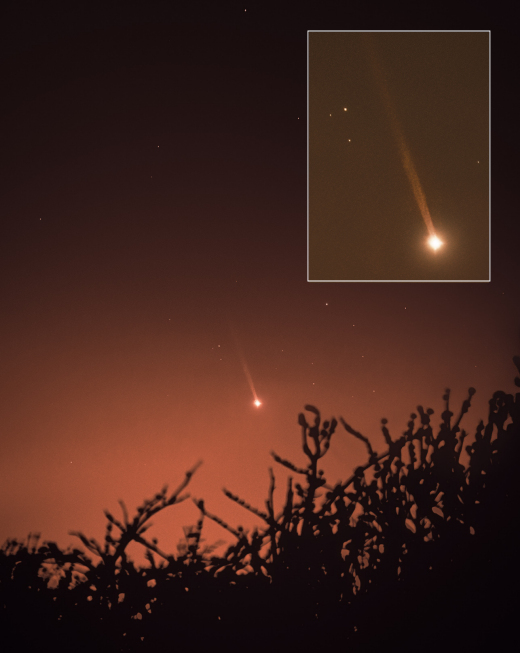
April 12, 2023: Astronomy used to be so simple. Comets had tails, and planets did not. Mercury is making things complicated. When Dr. Sebastian Voltmer of Spicheren, France, photographed the planet this week, it exhibited a magnificent plume of gas flowing behind it:

“Mercury is NOT a comet, but it sure looks like one,” says Voltmer. “Solar wind and micro-meteorites hitting the planet eject sodium atoms from Mercury’s surface. This creates a yellow-orange tail of sodium gas that is around 24 million kilometers long.”

First predicted in the 1980s, Mercury’s tail was discovered in 2001. The gaseous plume is made of many elements from Mercury’s rocky surface, not only sodium. Sodium, however, dominates the scattering of sunlight and gives the tail its striking yellow hue.

People watching Mercury climb up the evening sky this month may be wondering “why didn’t I see a tail?” Answer: A special filter is required. “I used a 589 nanometer filter tuned to the yellow glow of sodium,” says Voltmer. “Without such a filter, Mercury’s tail is almost invisible to the naked eye.”

Mercury’s tail waxes and wanes in brightness as it orbits the sun. The predictable pattern is shown in this movie from NASA’s MESSENGER spacecraft, which spent years observing Mercury’s tail from close range:

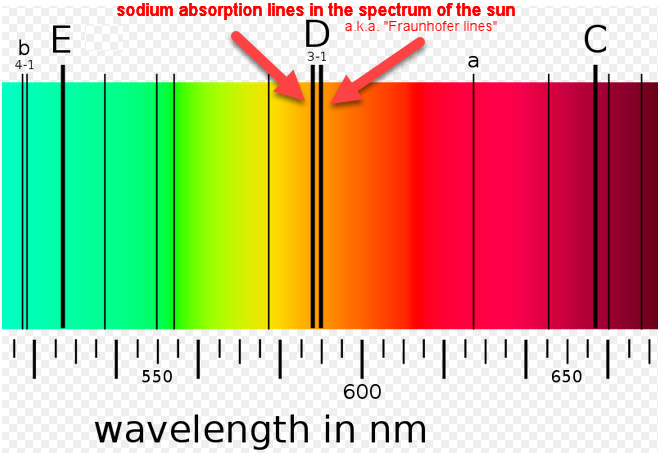
For reasons having to do with the Doppler shift of sodium absorption lines in the solar spectrum, Mercury’s tail is most luminous when the planet is ±16 days from perihelion (closest approach to the sun).

This means the tail’s maximum luminosity is only a few days away. Mercury will be 16 days past perihelion on Monday, April 17th, located in the sunset sky almost directly below Venus. If you have a sodium filter, take a look!

more images: from Nicolae-Adrian Corlaci of Bucharest, Romania; from Paul Robinson near Memphis, TN

This story was brought to you by Spaceweather.com
Solar Max Might Arrive Early

April 13: 2023: Solar Maximum is coming–maybe this year. New research by a leading group of solar physicists predicts maximum sunspot activity in late 2023 or early 2024, a full year earlier than other forecasts.

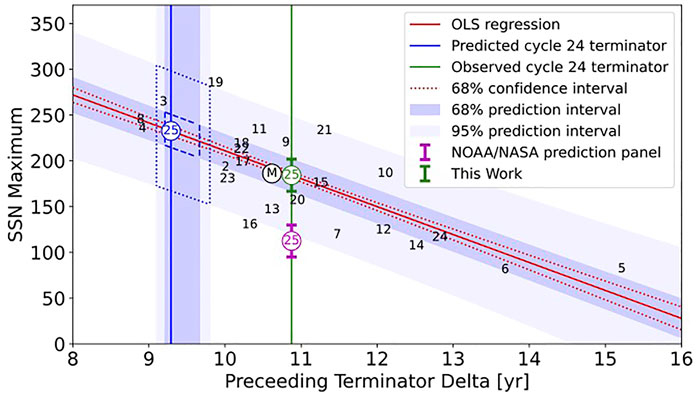
“This is based on our work with the Termination Event,” explains Scott McIntosh, lead author of a paper describing the prediction, published in the January 2023 edition of Frontiers in Astronomy and Space Sciences.

Above: The red curve shows McIntosh et al’s new prediction of an early Solar Max. 

The “Termination Event” is a relatively new concept in solar physics. It is a period of time on the sun as short as one month when magnetic fields from one solar cycle abruptly die (they are “terminated”) allowing magnetic fields from the next solar cycle to take over. After a Termination Event, the new solar cycle skyrockets.

McIntosh and colleagues have studied termination events for many solar cycles, and they have discovered that its timing can predict the future. “Our latest work pinpoints the Termination Event between Solar Cycle 24 and Solar Cycle 25 at mid-Dec. 2021,” explains McIntosh. “This tells us about the size and date of the next solar maximum.”

According to their paper, Solar Max is coming between late 2023 and mid 2024, with a peak total monthly sunspot number of 184±63 (95% confidence). This means Solar Cycle 25 could be twice as strong as old Solar Cycle 24, which peaked back in 2014. 

Above: The sun’s polar magnetic field (red=N, blue=S) is weakening and will soon flip

Their forecast jibes with another big event now underway. The sun’s global magnetic field is about to flip. This happens near the peak of every solar cycle. Magnetic fields near the sun’s poles weaken, change sign, and start growing again in the opposite direction. It’s like taking a bar magnet from your refrigerator and flipping it upside down–except this bar magnet is as big as a star.

Measurements from Stanford’s Wilcox Solar Observatory (pictured above) confirm that the weakening is underway now, with polar magnetic fields probably crossing zero in no more than a few months. “Historically the zero crossing precedes actual sunspot number maximum by 6 to 12 months,” says McIntosh, “so this is in accord with our prediction of an early Solar Max.”

This forecast is about to be tested, with confirmation as little as 6 to 12 months away. Stay tuned for Solar Max.

This story was brought to you by Spaceweather.com
Jupiter Spacecraft Photo-op

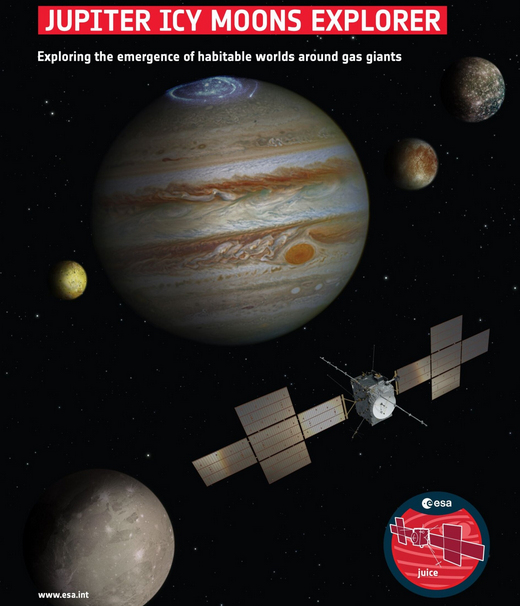
April 12, 2023: The European Space Agency is about to launch a very important spacecraft: The Jupiter Icy Moons Explorer–“Juice” for short. Its mission is to probe Europa, Ganymede, and Callisto, moons with oceans larger than those of Earth and possible habitats for extraterrestrial life. Liftoff is scheduled for April 13th (12:15 UT) from French Guiana.

“It may be possible for experienced observers to photograph Juice as it recedes on the night after launch,” says John H. Rogers, the Jupiter Section Director of the British Astronomical Association. “The solar panels should be deployed by 100 minutes after launch, with full deployment over the next 17 days. You can obtain an ephemeris from JPL-Horizons. Type ‘Juice’ in for the target body.”

“The best views will be from the Far East and Australia, from about 14:00 UT onwards when solar panels are deployed,” says Rogers. “The brightness will then diminish as the distance from Earth increases; by the time it is visible from western Europe, approaching 150,000 km out, one experienced observer suggests that it might be around mag.13 or 14.”

Juice will take 8 years to reach Jupiter. After a series of visits to Callisto and Europa, Juice will enter into a permanent orbit around Ganymede in 2034–the first time a spacecraft has ever held an orbit around a moon other than our own. Bigger than the planet Mercury, Ganymede is also the only moon in the solar system with its own magnetic field, providing a possible protective cocoon for life.

If you see Juice leaving Earth, please submit your photos here.

This story was brought to you by Spaceweather.com
The 7th X-flare of 2023 — and it’s only March

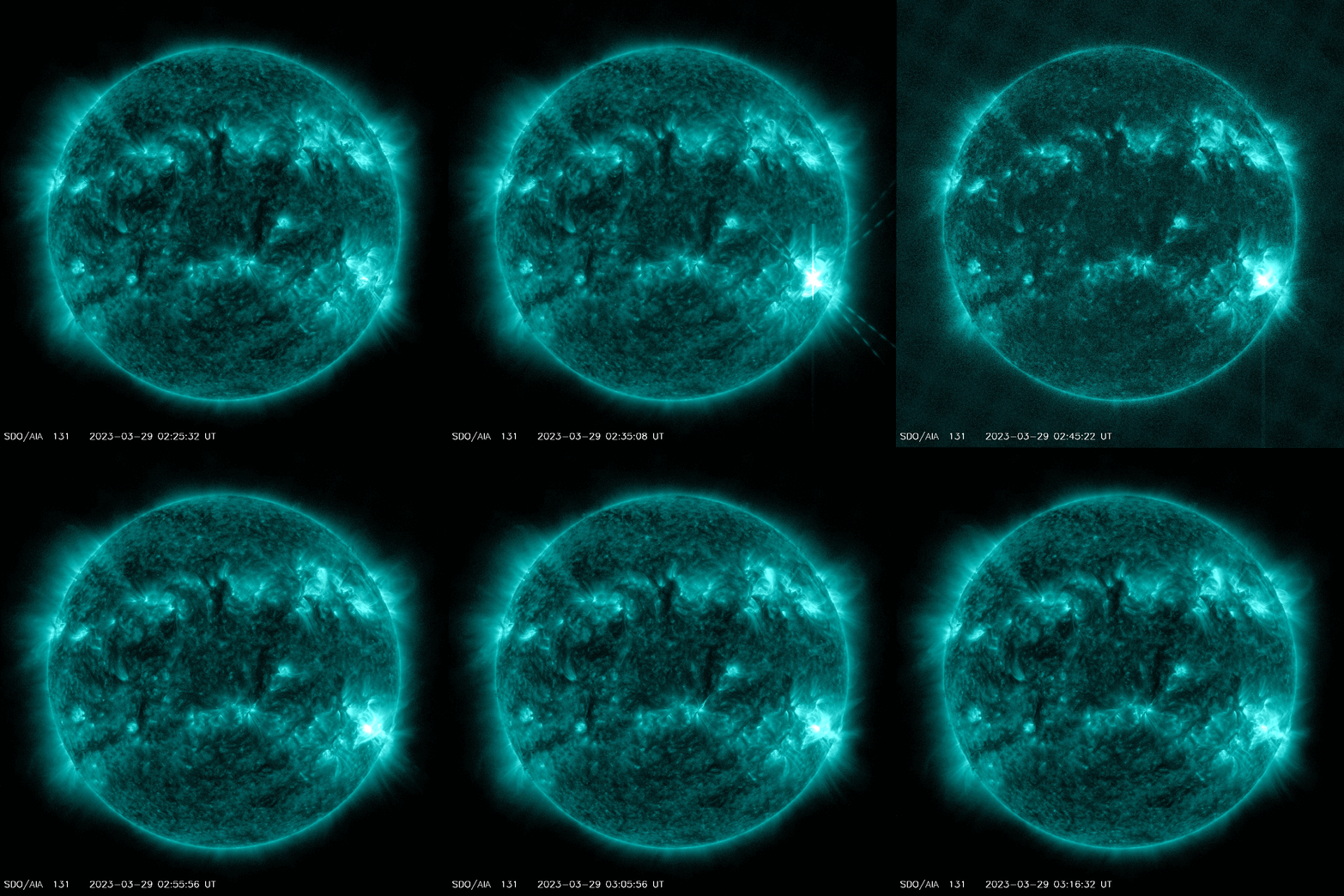
March 29, 2024: This is becoming routine. The sun just produced another X-class solar flare, the 7th of 2023. The X1.2-category explosion came from sunspot AR3256 near the sun’s southwestern limb:

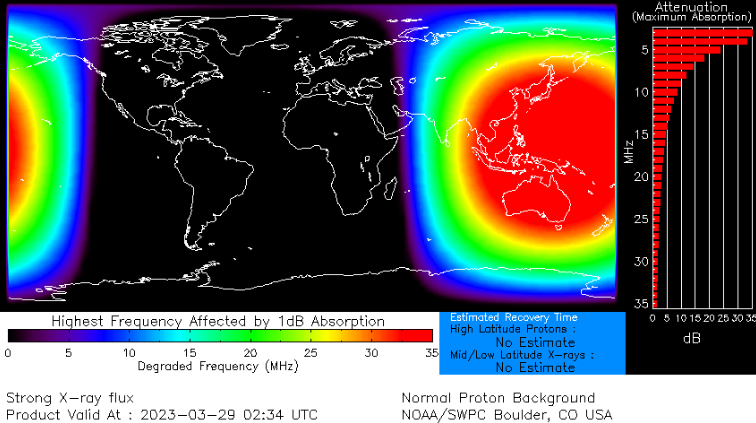
Radiation from the flare ionized the top of Earth’s atmosphere, causing a strong shortwave radio blackout over southeast Asia, Australia and New Zealand. Ham radio operators may have noticed loss of signal and other propagation effects below 30 MHz for as much as an hour after the peak of the flare (March 29th @ 0233 UT).

A faint CME left the sun after the explosion. NOAA analysts have determined that it will miss Earth–no impact.

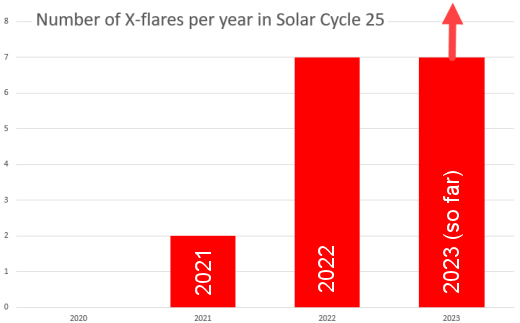
The real significance of this flare may be the number “7.” That’s the total number of X-flares in all of 2022. With today’s flare, the sun has already matched that total in 2023–and it’s only March.

This is yet another sign that Solar Cycle 25 is rapidly intensifying. If the trend continues, we could have nearly 30 X-flares by the end of 2023, an order-of-magnitude greater activity than only two years ago. Official forecasts are calling for Solar Maximum to arrive in 2024 or 2025. If so, there is plenty of time for the solar cycle to intensify even more; X-flares could become routine, indeed. Solar flare alerts: SMS Text.

This story was brought to you by Spaceweather.com