Can Humans Sense Magnetic Storms?

March 28, 2019: Close your eyes and relax. Daydream about something pleasant. In this state your brain is filled with “alpha waves,” a type of electrical brainwave associated with wakeful relaxation.

Now try it during a geomagnetic storm. It may not be so easy. A new study just published in the journal eNeuro by researchers at Caltech offers convincing evidence that changes in Earth’s magnetic field can suppress alpha waves in the human brain.

testsetup

Schematic drawing of human magnetoreception test chamber at Caltech. This diagram was modified from the figure “Center of attraction” by C. Bickel (Hand, 2016) with permission.

Researchers have long known that living creatures can sense magnetic fields. For instance, honeybees, salmon, turtles, birds, whales, and bats use the geomagnetic field to help them navigate, and dogs can be trained to locate buried magnets.

“Many animals have magnetoreception, so why not us?” asks Connie Wang, Caltech graduate student and lead author of the eNeuro study.

To find out if humans can indeed sense magnetic fields, the researchers built an isolated radiofrequency-shielded chamber where participants sat in utter darkness for an hour. As magnetic fields shifted silently around the chamber, participants’ brain waves were measured using electrodes positioned at 64 locations on their heads.

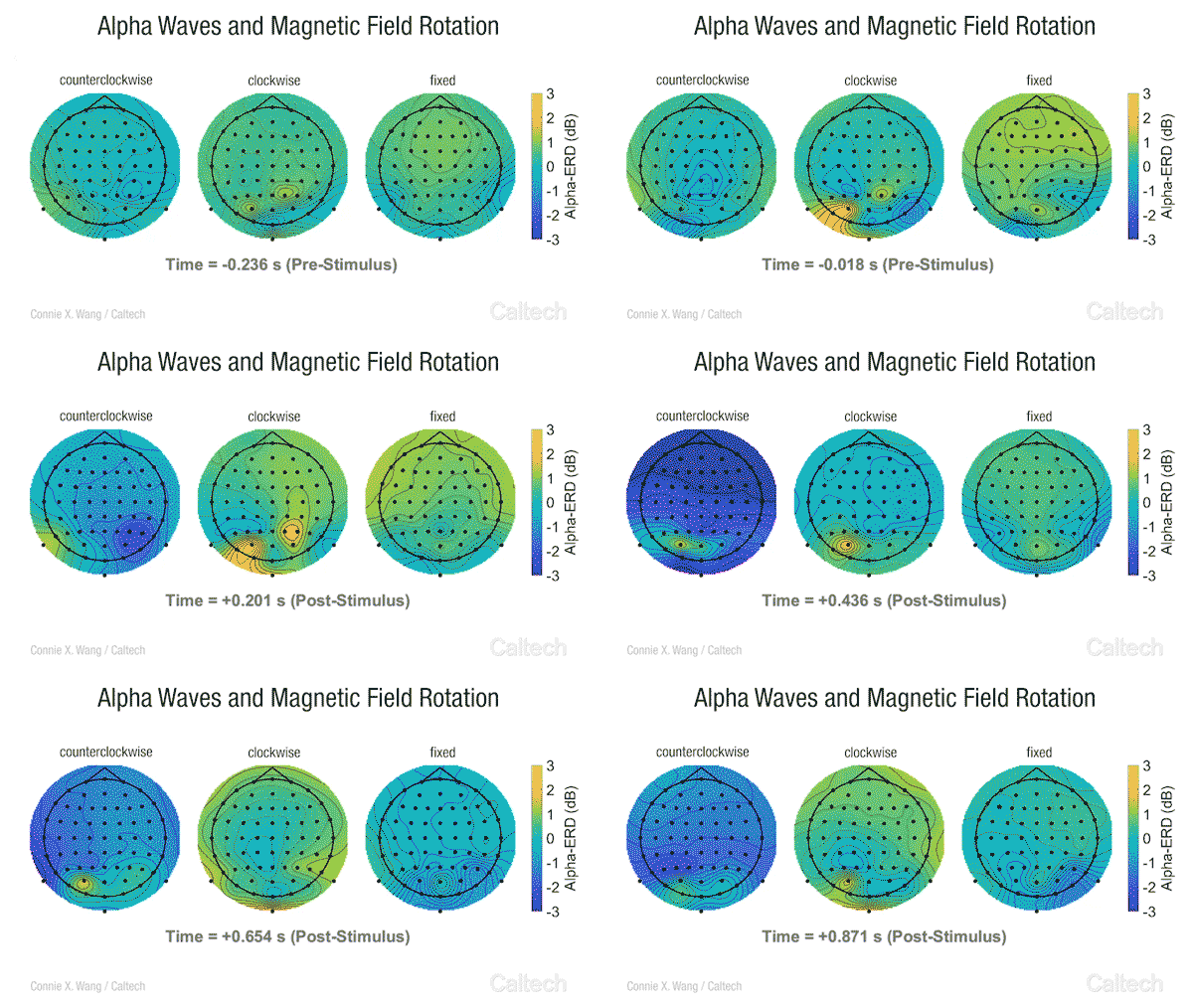
In some of the 34 participants, alpha brainwaves decreased in power by as much as 60 percent in response to the shifting fields. Additional runs of the experiment showed that the effect was reproducible.
Magneto-600p03c32f72.original

This video shows changes in alpha brainwave amplitude following rotations of an Earth-strength magnetic field. On the left, counterclockwise rotations induce a widespread drop in alpha wave amplitude.  The darker the blue color, the more dramatic the drop.

Study co-authors Joseph Kirschvink and Shin Shimojo say this is the first concrete evidence of a new human sense: magnetoreception.

Remarkably, participants who experienced the changes reported no awareness of them. It appears to be a completely unconscious effect, never rising to the level of a conscious interruption. This led the researchers to suggest it may be vestigial, some remnant of an ancient ability to navigate using local magnetic cues.

“It is perhaps not surprising that we might retain at least some functioning neural components [of magnetoreception], especially given the nomadic hunter-gatherer lifestyle of our not-too-distant ancestors,” says Kirschvink.

“As a next step, we ought to try bringing this into conscious awareness,” adds Shimojo.
magnetogram

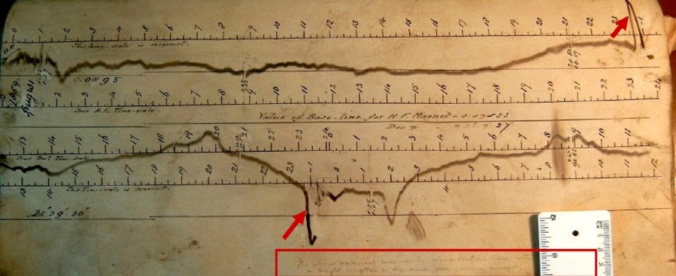
This strip chart recording from an old Greenwich Observatory magnetometer shows sudden changes in the magnetic field caused by an intense solar flare on Sept. 1, 1859. (From Cliver & Keer 2012, with permission of Solar Physics.)

Does this mean people may be able to sense geomagnetic storms? It’s unclear.

When coronal mass ejections (CMEs) and streams of solar wind reach Earth, they cause our planet’s magnetic field to shake, moving back and forth. During the Carrington Event of Sept. 1859, for instance, compass needles at mid-latitudes swung back and forth by several degrees (ref). The Caltech study didn’t look at such small changes, however. Magnetic fields inside their test chamber shifted plus or minus 90 degrees at least. As a result, we do not yet know if human magnetorecepton is sensitive enough to detect the more subtle changes typically associated with space weather.

By developing a robust methodology for testing magnetoreception, Kirschvink says he hopes their study can act as a roadmap for other researchers who are interested in replicating and extending this research. “The full extent of [magnetoreception] remains to be discovered,” he says.

The original research may be read here.
Earth-Directed Solar Flare

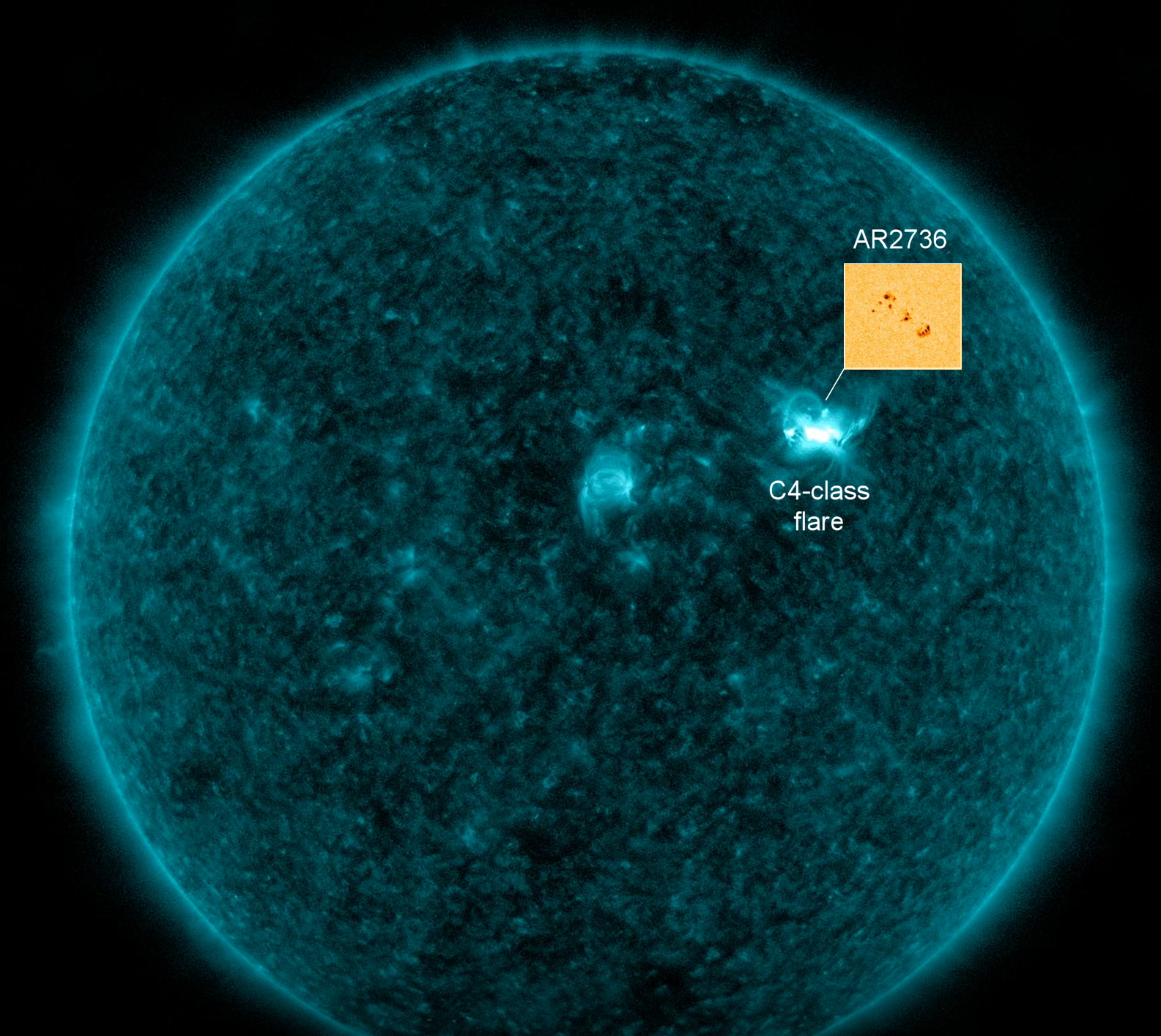
March 20, 2019: Northern spring began with a bang. On March 20th at 1118 UT, new sunspot AR2736 exploded, producing a C4-class solar flare that lasted more than an hour. The sunspot is inset in this image of the flare’s extreme ultraviolet flash:

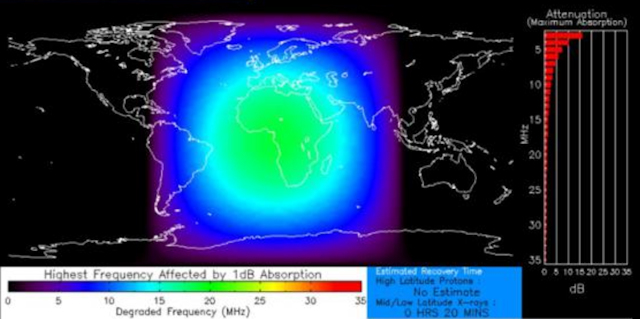
The explosion sent minor waves of ionization rippling through Earth’s upper atmosphere and caused a shortwave radio “brownout” over southern parts of Europe and all of Africa. Anomalies in radio propagation at frequencies below 20 MHz might have been noticed by, e.g., mariners and ham radio operators.

The explosion also hurled a coronal mass ejection (CME) into space. NASA’s STEREO-A spacecraft saw the cloud racing away from the sun:

Additional images from the Solar and Heliospheric Observatory (SOHO) confirm that the CME is heading for Earth. While the bulk of the cloud appears set to miss our planet, the flanks of the CME should deliver a glancing blow. Estimated time of arrival: Late on March 22nd or sometime on March 23rd. NOAA forecasters favor the March 23rd estimate. Either way, moderate (G2) geomagnetic storms are possible when the CME arrives. Stay tuned for updates. Aurora alerts: SMS text, email.

Realtime Aurora Photo Gallery

Springtime Cracks in Earth’s Magnetic Field

March 18, 2019: Cracks in Earth’s magnetic field? It only sounds like science fiction. In fact, a magnetic crack opened for more than 5 hours on March 16-17. The resulting G1-class geomagnetic storm sparked stunning auroras around the Arctic Circle. “The display I witnessed knocked me off my feet!” says photographer of Göran Strand of Björkliden Sweden:

“What a fantastic show,” he says. “Here is a link to some realtime footage.”

The storm was not predicted, yet it comes as no surprise. The vernal equinox is only days away, and at this time of year cracks often form in Earth’s magnetic field. Solar wind can pour through the gaps to fuel bright displays of Arctic lights.

This is called the the “Russell-McPherron effect,” named after the researchers who first explained it. The cracks are opened by the solar wind itself. South-pointing magnetic fields inside the solar wind oppose Earth’s north-pointing magnetic field. The two, N vs. S, partially cancel one another, weakening our planet’s magnetic defenses.

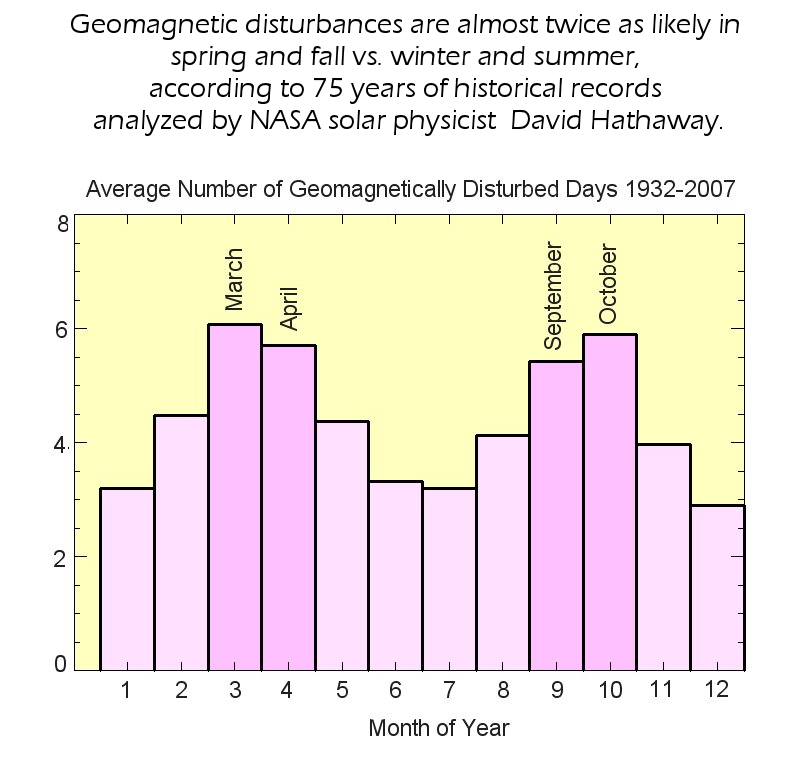
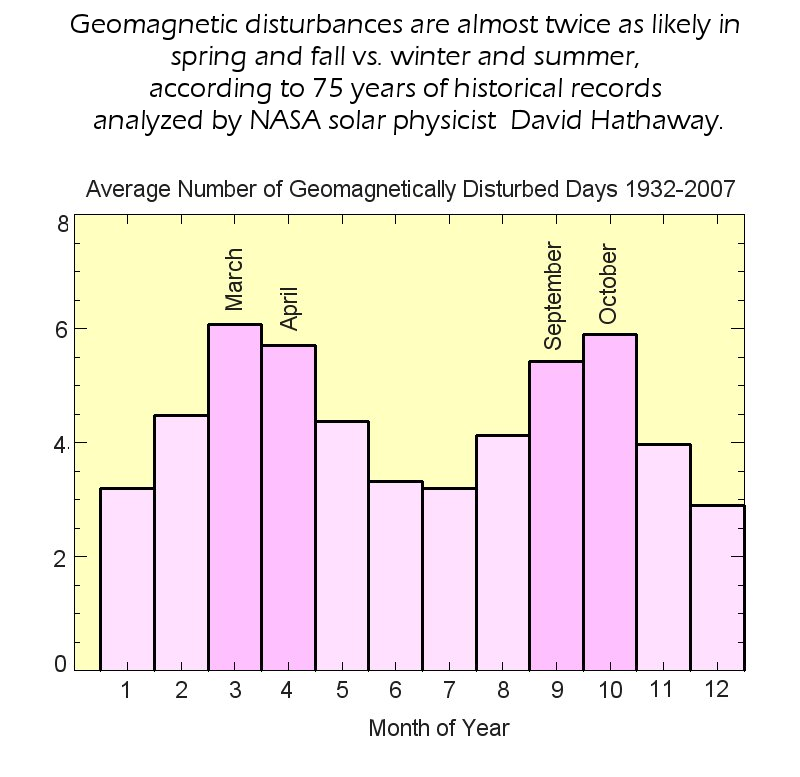
This cancellation can happen at any time of year, but it happens with greatest effect around the equinoxes. Indeed, a 75-year study shows that March is the most geomagnetically active month of the year, followed closely by September-October–a direct result of “equinox cracks.”

Northern spring begins on March 20th. Stay tuned for green. Aurora Alerts: SMS text, email.

Realtime Aurora Photo Gallery

Neutrons Detected on Commercial Airplane Flights

March 13, 2019: Long lines. Narrow seats. Baggage fees. You recognize this list. It’s the downside of flying on modern commercial airlines. And now we have a new item to add: cosmic ray neutrons.

Spaceweather.com and Earth to Sky Calculus have just completed a 5-continent survey of neutron radiation at aviation altitudes. From December 2018 through February 2019, Hervey Allen of the University of Oregon’s Network Startup Resource Center carried  Earth to Sky radiation sensorsincluding neutron bubble chambers–onboard commercial flights from North America to Europe, Africa, South America and Asia.

map2

Hervey logged 83 hours in the air as he traveled 41,500 miles above 30,000 feet. For reference, that’s almost twice the circumference of the Earth. The entire time, he gathered data on X-rays, gamma-rays and neutrons in an energy range (10 keV to 20 MeV) similar to that of medical radiology devices and “killer electrons” from the Van Allen Radiation Belts.

The results were eye-opening. During the trip, Hervey recorded 230 uGy (microGrays) of cosmic radiation. That’s about the same as 23 panoramic dental x-rays or two and a half chest X-rays. Moreover, 41% of the dose came in the form of neutrons. This confirms that cosmic-ray neutrons are abundant at aviation altitudes and must be considered in any discussion of “Rads on a Plane.”

neutrons1

Each bubble represents a cosmic ray neutron penetrating the chamber. Left: Neutrons on board a flight from San Francisco to South Korea. Right: Neutrons detected while crossing the Atlantic Ocean from New Jersey to Brussels.

Researchers have long known that cosmic rays penetrate airplanes. Our own 3-year survey of global radiation shows that X-rays and gamma-rays at aviation altitudes are typically 50 times stronger than sea level. This new survey focuses on neutrons, a more potent type of radiation from deep space. Studies show that neutrons can be ten times more effective at causing biological damage compared to X-rays and gamma-rays in the same energy range. Neutrons are so effective, they are used for cancer therapy, killing tumors better than other forms of radiation.

Should we be worried about Hervey? Although he absorbed a lot of radiation during the survey, he did so slowly. Hervey’s whole body dose was spread out over 14 flights and 3 months–unlike, say, a dental X-ray which is localized to the jaw and delivered in a split-second. Slow delivery gives the body time to respond, repair damage, and move on without obvious health effects. On the other hand, at least one study shows that low-dose radiation received over a long period of time may slightly increase the risk of leukaemia, while flight attendants have been found to have a higher risk of cancer than the general population.

neutrons2

Left: Neutrons detected while flying from Europe to Accra, Ghana. Right: Ground-level measurements in Ghana with giant ant mounds in the background.

Our survey also revealed some geographical variations. Generally speaking, neutron radiation was stronger near the Arctic Circle and weaker near the equator. It was weakest of all, however, in flights over Chile as the aircraft skirted the South Atlantic Anomaly. We will be investigating these variations with additional flights in the near future.

Stay tuned!

The CMEs Are Coming. (Maybe)

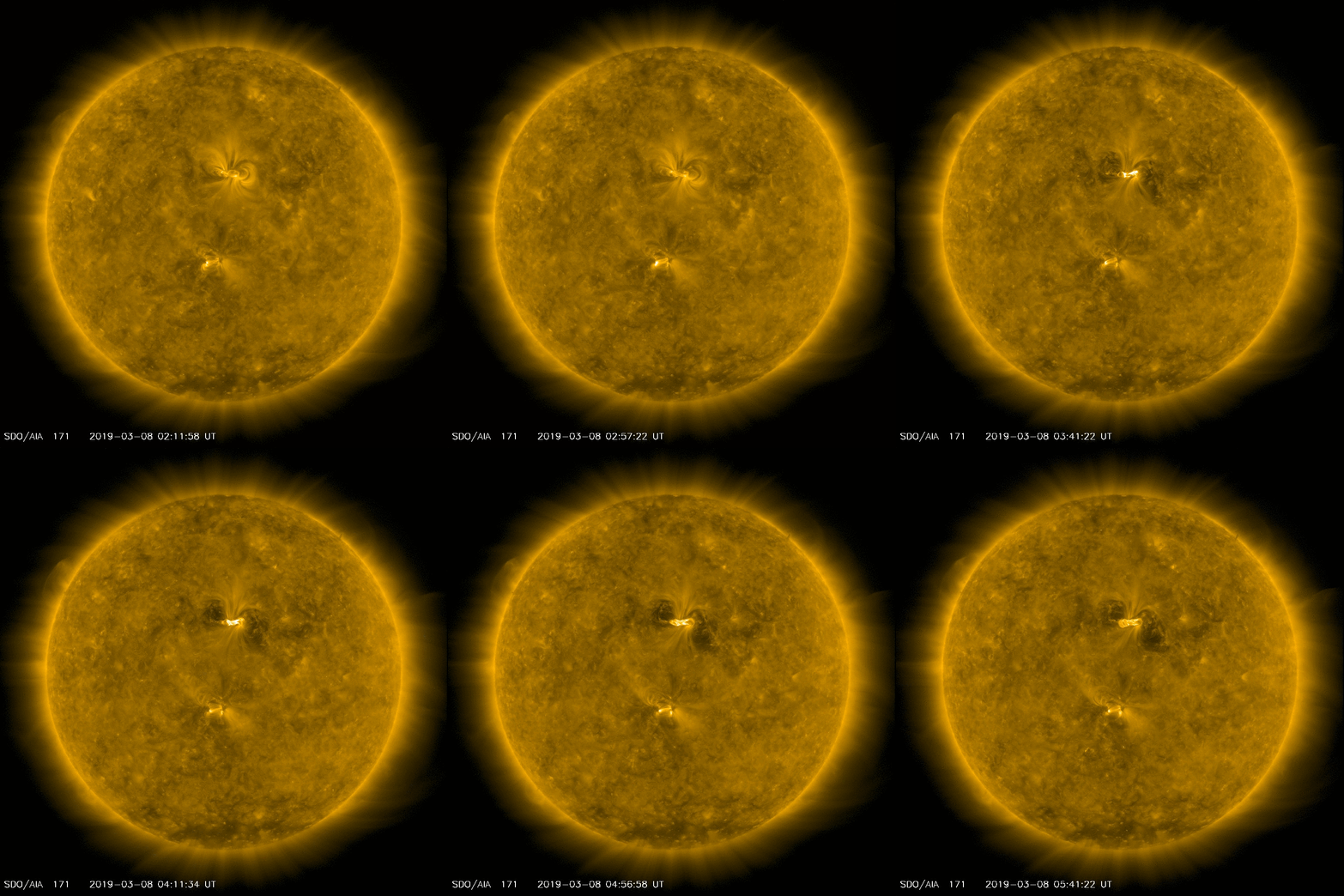
March 9, 2019: Earth is about to be sideswiped by a pair of coronal mass ejections (CMEs). Maybe. The two solar storm clouds left the sun on March 8th when sunspot AR2734 erupted, producing a C1-class solar flare. NASA’s Solar Dynamics Observatory recorded the blast:


Above: This movie comes from SDO’s extreme ultraviolet telescope–hence the strangely beautiful colors.

The explosion and its ultraviolet afterglow lasted for more than an hour. Such long-duration flares are notorious for producing “solar tsunamis” and CMEs. Indeed, in the global movie, below, a shadowy shockwave may be seen billowing away from the blast site like a ripple in a giant pond. That wave hurled two faint coronal mass ejections (CMEs) into space.

NOAA analysts have modeled the eruption and reached the following conclusions: On March 11th, one CME will pass just behind Earth while the other passes just in front. Both could deliver glancing blows to our planet’s magnetic field. Minor G1-class geomagnetic storms are possible when Earth splits the gap between these two solar storm clouds.

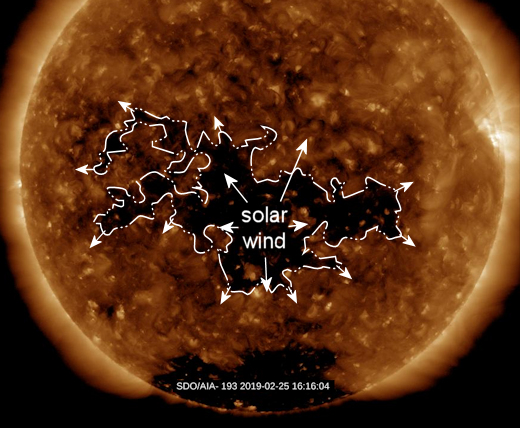
In recent months, geomagnetic storms have been caused mainly by streams of solar wind flowing from holes in the sun’s atmosphere. CMEs tend to be more effective instigators of geomagnetic storms and auroras. This is because of intense shocks and strong magnetic fields CMEs often contain.

There’s no guarantee these CMEs will hit Earth. Just in case, Arctic sky watchers should be alert for bright lights on Monday night. Subscribers to our Space Weather Alert service will receive an instant text message when the CMEs arrive. Aurora Alerts: SMS text, email.

A Really Weird Solar Eclipse

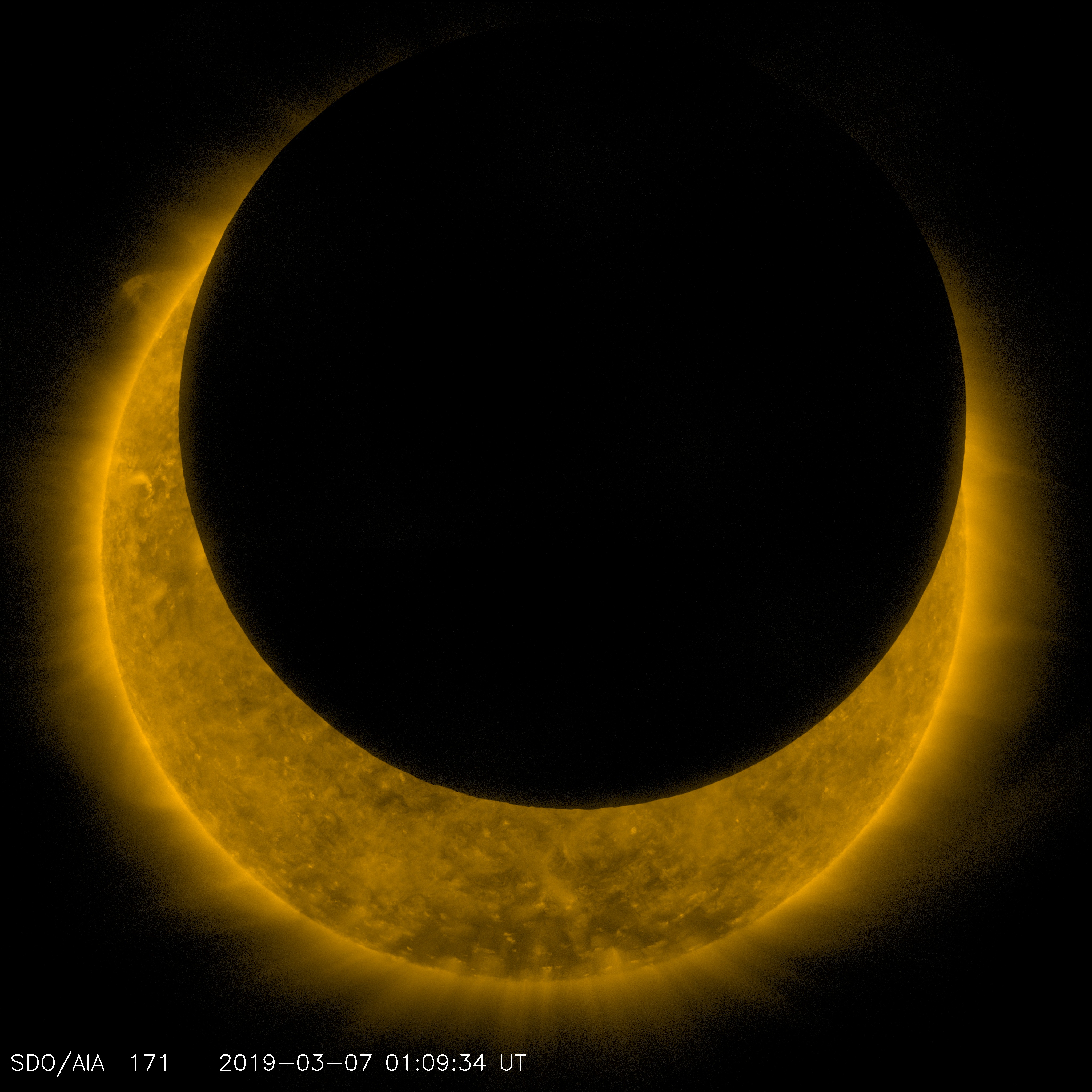
March 7, 2019: Earlier today, NASA’s Solar Dynamics Observatory (SDO) observed an eclipse of the sun–a strange kind of eclipse that you can only see while orbiting Earth. The black disk of the New Moon passed in front of the sun, reversed course, and did it again:

During the eclipse, which lasted just over 4 hours, as much as 82% of the sun was covered. Technically, that makes it an annular solar eclipse, not total. At maximum, an annulus or “ring of fire” completely surrounded the Moon.

The strange “double-dip” motion of the Moon across the sun is a result of orbital mechanics. Both SDO and the Moon are orbiting Earth, but at different speeds. SDO’s velocity of ~3 km/s is faster than the Moon’s velocity of 1 km/s. SDO thus overtakes the Moon first in one direction, then the other, during the long eclipse.

High-resolution images of the eclipse reveal that the Moon is not perfectly smooth. The little bumps and irregularities you see are lunar mountains backlit by solar plasma:

Images like these have practical value to the SDO science team. The sharp edge of the lunar disk helps researchers measure the in-orbit characteristics of the telescope–e.g., how light diffracts around the telescope’s optics and filter support grids. Once these are calibrated, it is possible to correct SDO data for instrumental effects and sharpen images of the sun even more than before.

Realtime Space Weather Photo Gallery

A Month Without Sunspots

March 1, 2019: There are 28 days in February. This year, all 28 of them were spotless. The sun had no sunspots for the entire month of Feb. 2019. This is how the solar disk looked every day:

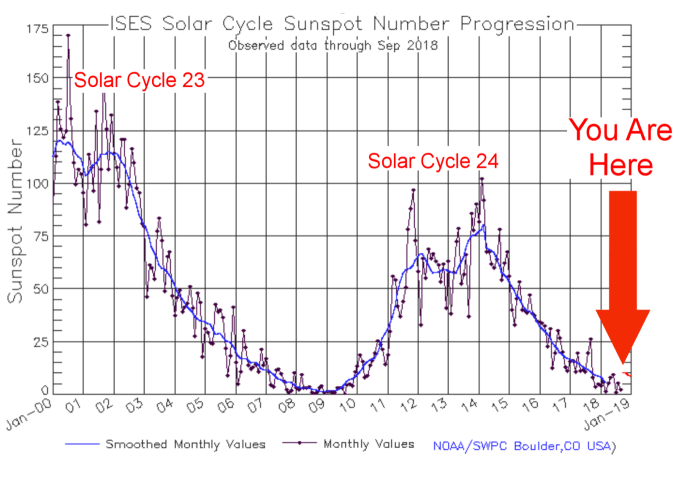
The last time a full calendar month passed without a sunspot was August 2008. At the time, the sun was in the deepest Solar Minimum of the Space Age. Now a new Solar Minimum is in progress and it is shaping up to be similarly deep. So far this year, the sun has been blank 73% of the time–the same as 2008.

Solar Minimum is a normal part of the solar cycle. Every ~11 years, sunspot counts drop toward zero. Dark cores that produce solar flares and CMEs vanish from the solar disk, leaving the sun blank for long stretches of time. These minima have been coming and going with regularity since the sunspot cycle was discovered in 1859.

However, not all Solar Minima are alike. The last one in 2008-2009 surprised observers with its depth and side-effects. Sunspot counts dropped to a 100-year low; the sun dimmed by 0.1%; Earth’s upper atmosphere collapsed, allowing space junk to accumulate; the pressure of the solar wind flagged while cosmic rays (normally repelled by solar wind) surged to Space Age highs. All these things are happening again.

How does this affect us on Earth? The biggest change may be cosmic rays. High energy particles from deep space penetrate the inner solar system with greater ease during periods of low solar activity. Indeed, NASA spacecraft and space weather balloons are detecting just such an increase in radiation. Cosmic rays can alter the flow of electricity through Earth’s atmosphere, trigger lightning, potentially alter cloud cover, and dose commercial air travelers with extra “rads on a plane.”

As February ended, March is beginning … with no sunspots. Welcome to Solar Minimum!

What Kind of Sunspot is That?

March 5, 2019: Today, a tiny sunspot is struggling to form in the sun’s northern hemisphere. It is so small, it has not yet been numbered, and it may fade away before the day is done, leaving the sunspot number technically zero. Even if it vanishes, though, this funny little sunspot is worth mentioning because of its tilted magnetic field:

This is a magnetogram (magnetic map) of the sun obtained on March 5th by NASA’s Solar Dynamics Observatory. The sunspot is inset. Note how its magnetic field is almost orthogonal to other patches of magnetism elsewhere on the solar disk.

Sunspots are islands of magnetism floating on the surface of the sun. Like all magnets, they have two poles, plus (+) and minus (-). Usually these poles are aligned almost parallel to the sun’s equator. Today’s sunspot is almost perpendicular.

Could this be a sunspot from the next solar cycle? Right now, Solar Cycle 24 is decaying into a deep Solar Minimum. Solar Cycle 25 is still in the offing. According to Hale’s Law, sunspot magnetic fields reverse polarity between solar cycles. If this sunspot continues to grow–and if its magnetic axis tilts a bit to the right–Hale’s Law would tag it as a member of Solar Cycle 25.

Postscript: The sunspot did continue to grow, and its magnetic field remained ambiguous. Based on its relatively low latitude, we believe it is probably a member of old Solar Cycle 24.

Physics of An Exploding Cosmic Ray Balloon

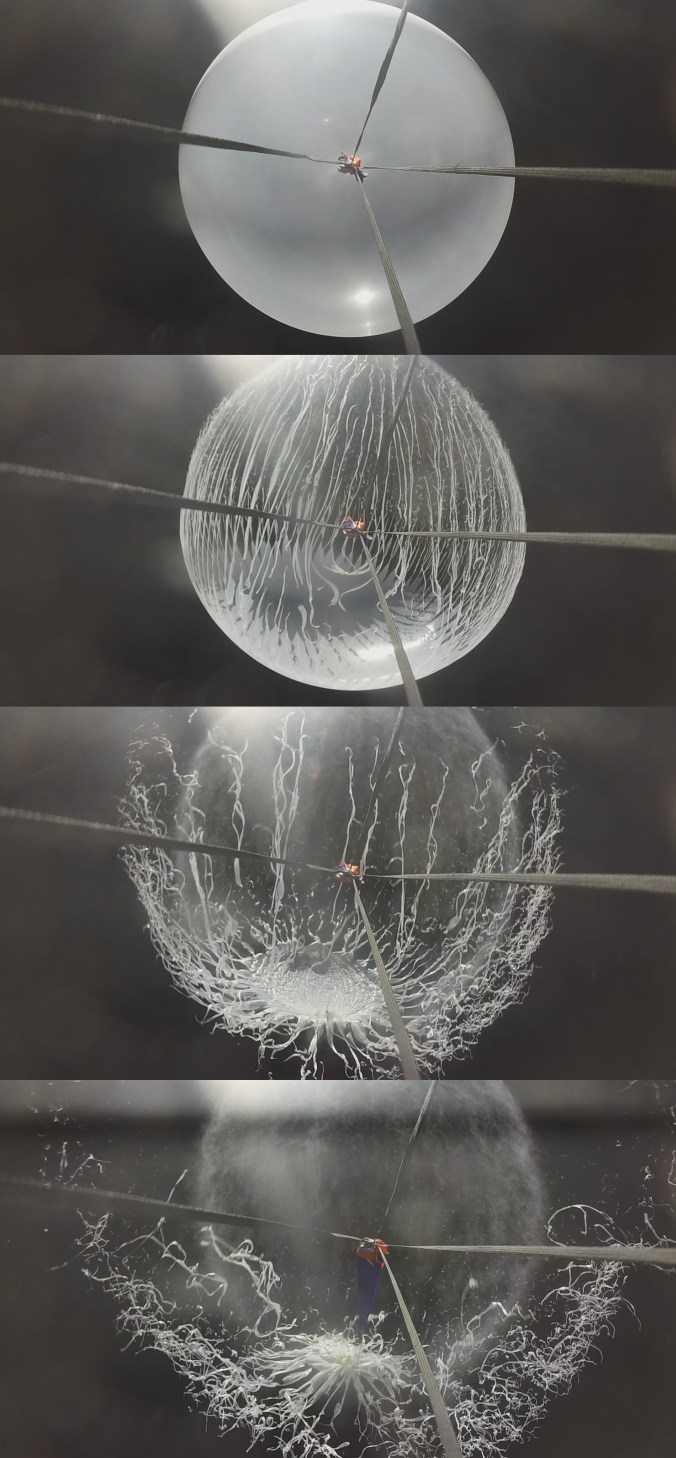
Feb. 21, 2019: On Nov. 14, 2018, the students of Earth to Sky Calculus launched a space weather balloon to measure increasing levels of cosmic rays in the atmosphere. At the apex of the flight, the balloon exploded and the radiation sensors parachuted back to Earth. A video camera on top of the payload recorded the pop:

pop_towerjog

These images illustrate recent findings about the physics of exploding balloons. In a Physical Review Letter entitled “Popping Balloons: A Case Study of Dynamical Fragmentation,” researchers from the Ecole Normale Supérieure in Paris report a series of laboratory experiments in which one balloon after another was popped and analyzed.

Basically, there are two ways a balloon can pop: along a single tear (the “opening regime”) or along many tears (the “fragmentation regime”). This video shows the two regimes in action. Which way the balloon decided to pop depends on the stress in the rubber membrane. When the stress is low, it can be relieved with a single tear, but when the stress is high, many tears are required to do the job.

Space weather balloons explode in the fragmentation regime, and the new research explains why. When space weather balloons are launched, they measure no more than 6 to 8 feet in diameter. By the time they reach the stratosphere, they have stretched into a sphere as wide as a house. So much stress requires many tears to release.

More information about this research is available from the American Physical Society.

Cosmic Rays Increasing for the 4th Year in a Row

Feb. 21, 2019: Cosmic rays in the stratosphere are intensifying for the 4th year in a row. This finding comes from a campaign of almost weekly high-altitude balloon launches conducted by the students of Earth to Sky Calculus. Since March 2015, there has been a ~13% increase in X-rays and gamma-rays over central California, where the students have launched hundreds of balloons.

neutronsandxrays2

The grey points in the graph are Earth to Sky balloon data. Overlaid on that time series is a record of neutron monitor data from the Sodankyla Geophysical Observatory in Oulu, Finland. The correlation between the two data sets is impressive, especially considering their wide geographic separation and differing methodologies. Neutron monitors have long been considered a “gold standard” for monitoring cosmic rays on Earth. This shows that our student-built balloons are gathering data of similar quality.

Why are cosmic rays increasing? The short answer is “Solar Minimum.” Right now, the 11-year solar cycle is plunging into one of the deepest minima of the Space Age. The sun’s weakening magnetic field and flagging solar wind are not protecting us as usual from deep-space radiation. Earth to Sky balloon launches in multiple countries and US states show that this is a widespread phenomenon.

solarcycle

Cosmic rays are of interest to anyone who flies on airplanes. The International Commission on Radiological Protection has classified pilots as occupational radiation workers because of cosmic ray doses they receive while flying. A recent study by researchers at the Harvard School of Public Health shows that flight attendants face an elevated risk of cancer compared to members of the general population. They listed cosmic rays as one of several risk factors. There are also controversial studies that suggest cosmic rays promote the formation of clouds in the atmosphere; if so, increasing cosmic rays could affect weather and climate.